What if atopic dermatitis could be measured not only by looking at the skin, but by detecting inflammation that is invisible to the eye?
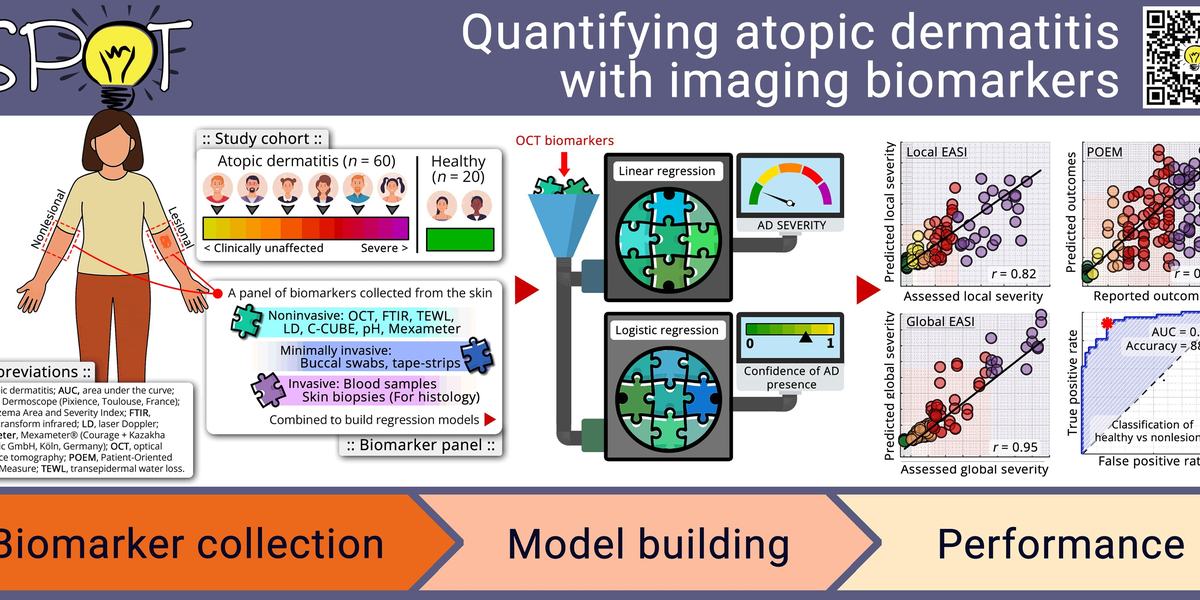
A study published in the British Journal of Dermatology investigated whether non-invasive technologies and biomarkers could provide a more objective way to assess atopic dermatitis severity. The researchers studied 80 participants aged 11 to 60 and combined several types of measurements into multimodal biomarker models.
One particularly promising component was »optical coherence tomography«, or OCT.
OCT uses light to produce detailed images of tissue structure without requiring a biopsy. It is already used in other areas of medicine and is increasingly being investigated as a tool for skin research.
In the study, models incorporating OCT-derived measurements were able to predict local atopic dermatitis severity with good accuracy. Models also showed strong performance for broader disease severity when information about the extent of atopic dermatitis was included.
Perhaps even more interesting was what researchers found when they examined skin that looked normal. People with atopic dermatitis can have areas without obvious redness, lesions or other visible signs. Clinically, that skin may appear unaffected.
Biologically, however, it may not be completely normal. The study found that multimodal biomarker models could distinguish apparently non-lesional atopic dermatitis skin from healthy skin with strong accuracy, reaching an area under the curve of 0.94.
This points to the presence of »subclinical inflammation« — biological changes that may remain active even when the skin appears clear.
That idea has important implications for how we think about disease control.
Traditional atopic dermatitis assessments such as EASI and investigator global assessments rely heavily on what clinicians can see. These tools are extremely useful, but they cannot capture every biological process happening below the surface.
Objective biomarkers could one day complement clinical examination. They might help researchers understand whether inflammation is truly resolving, monitor responses to treatment more precisely or potentially identify biological changes associated with disease activity.
There are also implications for clinical trials. More objective measurements could make it easier to compare treatment responses and understand whether therapies are affecting underlying disease biology in addition to visible symptoms.
This does not mean OCT or similar technologies are ready to replace standard atopic dermatitis assessments. The study was cross-sectional and involved a relatively small group of participants. Larger and longitudinal studies are necessary.
But the concept is important.
If researchers can reliably measure inflammatory processes without invasive biopsies, the future of atopic dermatitis monitoring may become considerably more precise.
One day, “your skin looks clear” and “your disease is biologically quiet” may become two different — and measurable — questions.